Physical Address
304 North Cardinal St.
Dorchester Center, MA 02124
Physical Address
304 North Cardinal St.
Dorchester Center, MA 02124
Back pain in young age is no longer rare. Earlier, back pain was mostly linked to old age, but today many young people suffer from it. Students, office workers, and even teenagers complain about back pain. Lifestyle changes and daily habits are the main reasons behind this growing problem.
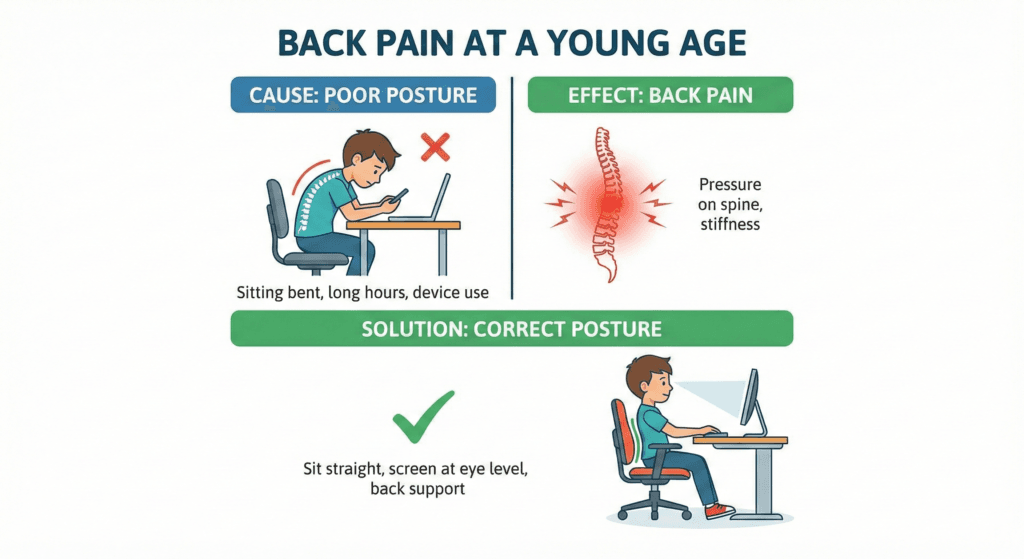
One of the most common causes of back pain in young age is poor posture. Many young people sit for long hours while studying, working on laptops, or using mobile phones. Sitting with a bent back or neck puts pressure on the spine. Over time, this leads to pain and stiffness in the back.
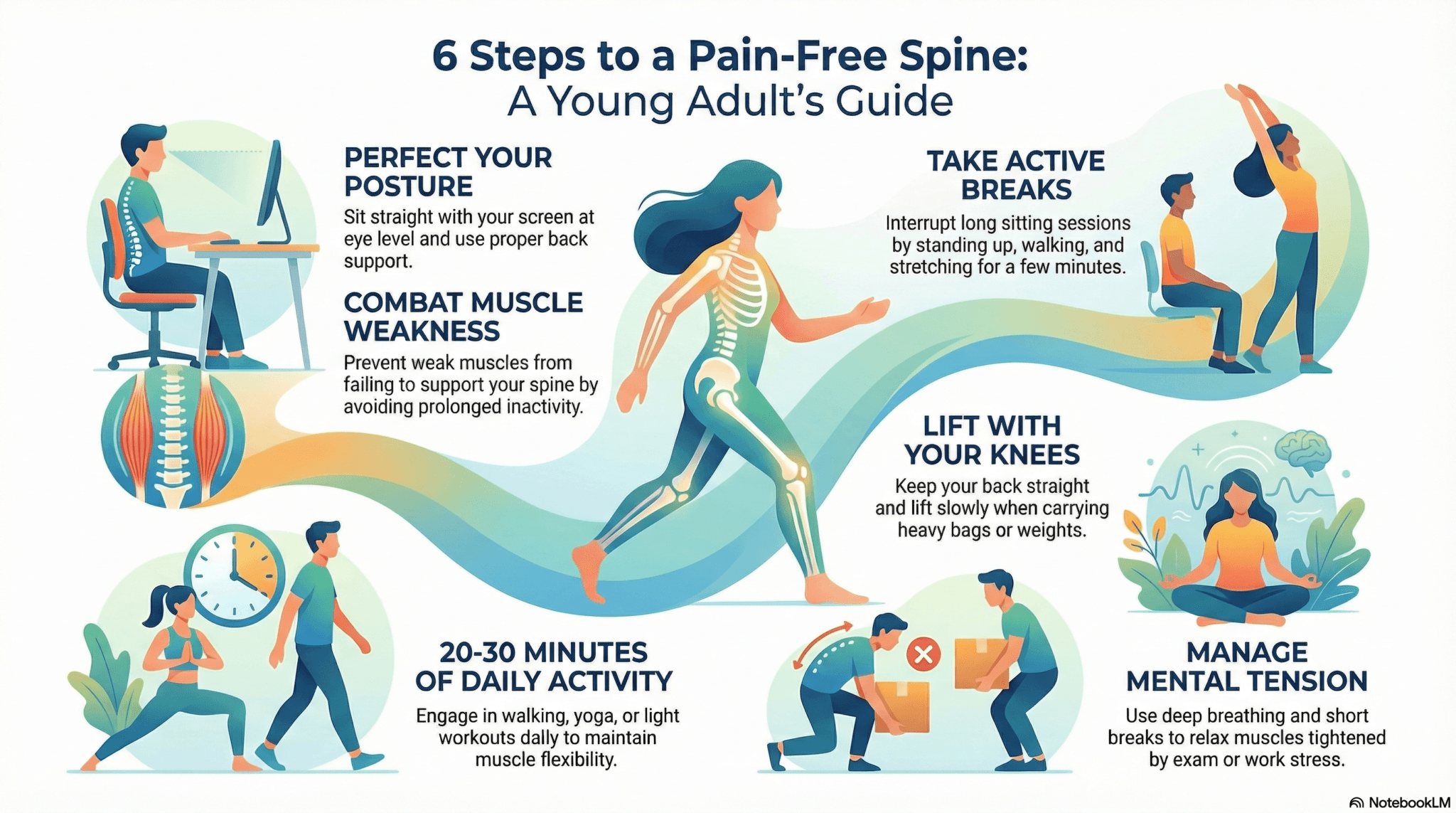
To prevent this, it is important to sit straight, keep the screen at eye level, and use proper back support while sitting.
Another major reason for back pain in young age is long sitting and lack of movement. Young people spend many hours sitting in classrooms, offices, or at home. When the body does not move enough, back muscles become weak. Weak muscles are unable to support the spine properly, which causes discomfort and pain.
Standing up, walking for a few minutes, and stretching during breaks can help reduce back pain.
Lack of exercise is also a strong reason behind back pain in young age. Many young people do not follow a regular exercise routine. Without exercise, muscles lose strength and flexibility.
Simple activities like walking, stretching, yoga, or light workouts can make the back stronger. Even 20 to 30 minutes of daily physical activity can help prevent back pain.
Back pain in young age can also happen due to the wrong way of lifting weight. Carrying heavy school bags, lifting gym weights incorrectly, or bending the back while lifting objects can cause muscle strain.
The correct method is to bend the knees, keep the back straight, and lift slowly. Sudden movements should always be avoided.
Stress and mental pressure also play an important role in back pain in young age. Exam pressure, work stress, and personal problems make muscles tight, especially around the neck and back.
Relaxing the mind through deep breathing, listening to music, short breaks, or light exercise can help relax muscles and reduce pain.
Sometimes back pain in young age starts because of minor injuries, falls, or sports strain. Ignoring the pain and continuing daily activities can make the condition worse.
Taking proper rest, applying mild heat, and doing gentle stretches can help. If pain continues for a long time, consulting a doctor is important.
To prevent back pain in young age, it is important to:
Small lifestyle changes can protect the back and improve overall health in the long run.
Back pain in young age should not be ignored. With proper care, correct habits, and regular movement, back pain can be reduced and even prevented.
n today’s fast-moving lifestyle, back pain in young age is becoming more common than ever. Long screen time, mobile phone usage, and sitting for hours without proper posture are affecting back health slowly. Many young people ignore early signs of back pain, thinking it will go away on its own. However, small pain can turn into a long-term problem if proper care is not taken on time.
Daily habits play a big role in back health. Sleeping on an uncomfortable mattress, carrying heavy bags, and lack of stretching can add pressure to the spine. Even small changes like adjusting sitting position, standing up regularly, and doing light stretching can make a noticeable difference. Paying attention to these habits early can help prevent serious back issues later in life.
Back pain in young age is not always caused by one reason. It is often a mix of posture problems, stress, and low physical activity. This is why a balanced routine that includes movement, rest, and relaxation is important. Listening to your body and taking action at the right time can help maintain a healthy and pain-free back.
This post is only for general information and knowledge. It does not give any medical advice, treatment, or guarantee. The tips shared here are based on common habits and lifestyle awareness. Everyone’s body is different, so results may vary. If you have severe pain, long-term back problems, or any serious health issue, please consult a qualified doctor before following any advice.